
How to Set Up a Safe Backyard Archery Range
How to set up a safe backyard archery range: legal checks, safe buffer distances, backstops and netting, choosing a target, layout and house rules.

By Archery Insider Editorial Team
· 8 min read
In this article
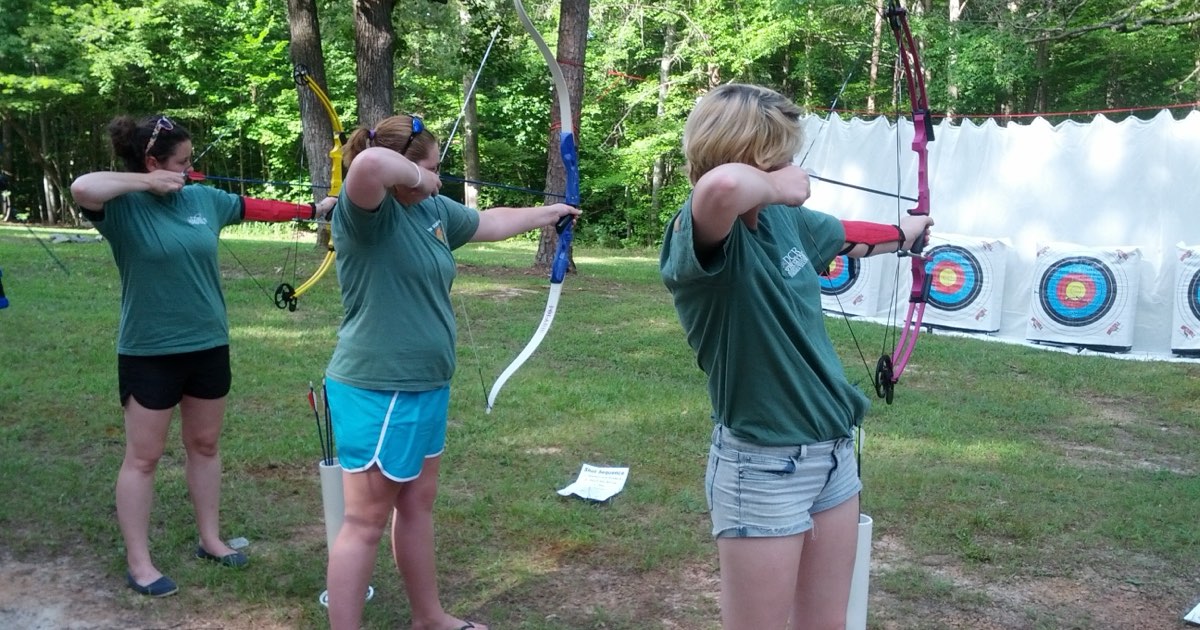
Practising at home is the fastest way to improve. Ten minutes a day at a backyard target does more for consistency than one long session a week at the club, and bowhunters in particular need regular practice from realistic positions.
A home range has to be built with the same care as a club range, though, because your neighbours, family and pets did not sign up for it. This guide walks through everything in the order you should do it: legal checks, site choice, backstop, target, layout and house rules.
Step 1: Check the rules where you live
Before you buy anything, find out whether you are allowed to shoot at home.
- Local ordinances. Check your town or county website, or ask the non-emergency police line. Some municipalities prohibit discharging bows within city limits; others allow it with conditions. Ankeny, Iowa, for example, has required 150 feet of clearance behind a target that faces an exterior property line.
- HOA or tenancy rules. Homeowners' associations and leases sometimes prohibit archery even where the law allows it.
- Insurance. Some home insurers want to know about home ranges, and archery club membership in some countries includes third-party liability cover.
- Ask a local archery shop. Staff usually know the local rules and where people practise.
If you are not allowed to shoot at home, a club or public range is the answer, and many have early or late hours that suit busy schedules.
Step 2: Choose the site
Walk the garden and think about where every miss could go.
- Look behind the target. What is in the line of fire, all the way to the horizon? The answer must be nothing that a missed arrow could hurt.
- Look to the sides. Paths, gates, play areas, and the neighbour's patio all count.
- Look at the ground. Rocks, paving and hard ground make arrows skip. Soft earth or grass is best.
- Look at the shooting direction. Shooting toward a slope or a solid earth bank is ideal. Shooting slightly downward from a deck reduces how far a miss travels.
- Look at the light. Avoid setting up where you face the low sun at your usual practice time.
How much space you need
The Archery Trade Association (ATA) publishes buffer guidance, quoted widely by target makers:
| Shooting distance | Buffer to each side | Buffer behind the target |
|---|---|---|
| Under 30 yards | 15 yards | 25 yards |
| 31 to 50 yards | 25 yards | 25 yards |
| Over 50 yards | 25 yards | Half the longest distance |
Few gardens have that much open space, which is why the backstop in Step 3 is not optional. If you cannot meet the buffer, you need a backstop and netting that physically stop every arrow, and a shooting position that makes misses unlikely.
Step 3: Build the backstop
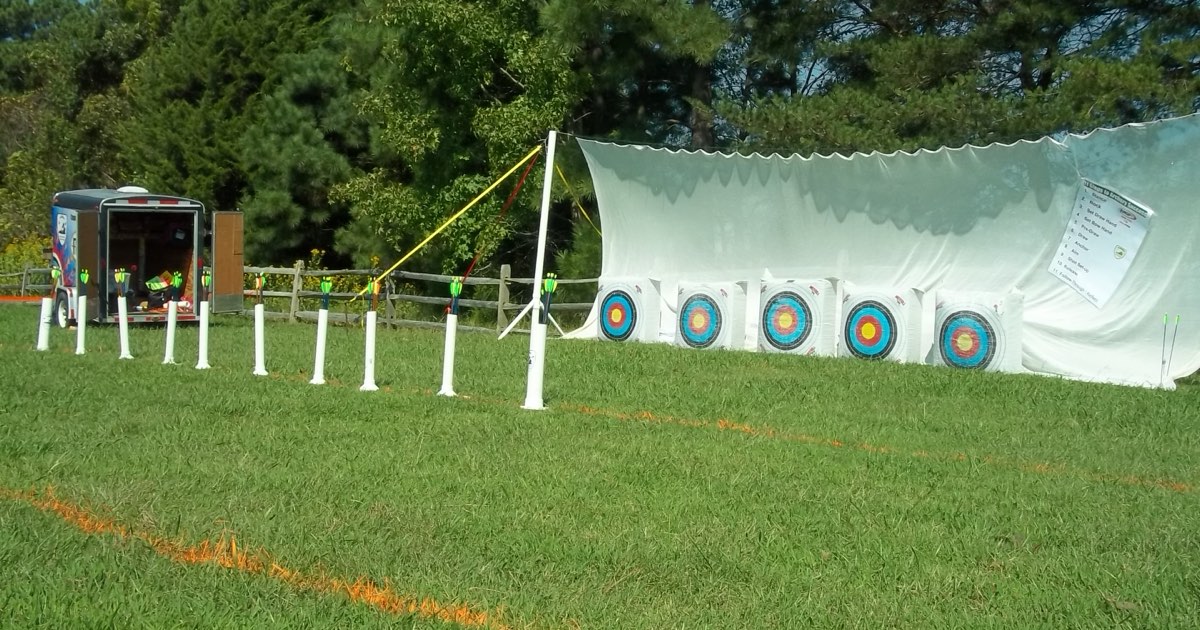
The backstop is what stops arrows that miss the target. It should extend at least 2 feet beyond the target on every side, and more is better.
| Backstop option | Pros | Cons |
|---|---|---|
| Earth bank or berm | Stops everything, permanent | Needs space and work to build |
| Straw or hay bales | Cheap, stops arrows well | Settles and leaves gaps; rots when wet |
| Layered foam or rubber mats | Reusable, compact | Limited thickness; check it stops your bow |
| Archery netting | Light, quick to put up | Morrell describes netting as suitable mainly for light draw weights (under about 30 lb) |
| Commercial target stands | Built-in containment | Higher cost |
Hang archery netting behind and beside the backstop as a second layer. It should be at least two feet wider than the backstop on each side and hang loose so it absorbs energy rather than acting as a trampoline.
Step 4: Choose the target
Pick a target that matches your bow and your arrows.
| Bow | Target to consider |
|---|---|
| Youth bows, light recurves | A bag target or straw boss; easy arrow removal |
| Recurves and longbows | Bag, layered foam or straw boss |
| Compound bows | Layered or fused foam rated above your bow's speed |
| Broadhead practice | Foam targets rated for broadheads, used only with a solid backstop |
| Crossbows | Targets specifically rated for crossbow speeds |
Target makers publish speed ratings, often in feet per second. Choose one rated comfortably above your bow's speed. Our comparison of the Morrell Yellow Jacket YJ-350 and Block Classic 18 explains the difference between fused and open-layer foam.
Placement tips:
- Raise the target so the centre is roughly at chest height, or set it on the ground for slightly downward shots.
- Put it on a stand or bales so it cannot topple when arrows hit.
- Leave the backstop visible around it, so you aim at a target with a stop behind it, never at open space.

Step 5: Lay out the range
- Mark the shooting line with a stake, a paver or a strip of tape. Everyone shoots from this line.
- Mark distances with permanent stakes, for example 5, 10, 15 and 20 yards.
- Keep the lane clear. Nothing should cross between the shooting line and the target: no washing lines, garden furniture or paths.
- Store arrows and bows near the shooting line, never downrange.
- Test with care. Shoot your first sessions slowly from the closest distance, and check how arrows behave in the target and backstop before moving back.
Step 6: Set house rules
A home range has the same risks as a club range without the range officer. Agree simple rules with everyone in the household.
- A clear "range open" signal. For example, a flag or sign at the back door, or simply telling everyone you are shooting.
- Nobody beyond the shooting line while anyone is shooting.
- Pets indoors or leashed during every session.
- Children always supervised when shooting or anywhere near the range.
- Walk, look, then pull. Same routine as at the club: walk to the target, look for arrows in the grass, stand to the side to pull.
- Bows put down while collecting. Nobody holds a nocked bow while someone is at the target.
Our range safety guide explains the full routine used at clubs; adapt it for home.
Step 7: Weather, light and maintenance
- Do not shoot in failing light. You need to see clearly everything behind and around the target.
- Cover or bring in foam targets when not in use; sun and rain shorten their life.
- Rotate the aiming spot. Shooting one spot destroys any target quickly. Use multi-spot faces or move your aiming point.
- Inspect the backstop monthly for gaps, settling bales and holes in netting.
- Check arrows after every session. A damaged arrow is more likely to miss, and more likely to break.
Bowhunting practice at home
If you are practising for hunting, a home range lets you shoot from the positions you will actually use: kneeling, sitting, or from an elevated platform. Shooting from a raised deck or platform also sends misses downward into the ground. Only shoot broadheads into targets rated for them, with a solid backstop, and use field points for most of your practice.
Backyard range checklist
| Check | Done |
|---|---|
| Local ordinance and HOA rules checked | |
| Neighbours informed | |
| Nothing in the line of fire behind or beside the target | |
| Backstop extends at least 2 ft beyond the target on all sides | |
| Netting behind and beside the backstop | |
| Target rated for your bow | |
| Shooting line and distances marked | |
| House rules agreed, signal in place | |
| Pets and children managed |
If you need a target, you can browse archery targets on Amazon, and archery backstop netting. Check the speed rating against your bow.
Frequently asked questions
Is it legal to shoot a bow in my garden?
It depends entirely on where you live. Some places allow it with no restrictions, some set conditions such as minimum clearances, and some ban it. Check local ordinances and any HOA or tenancy rules before setting up.
How far should my target be from the house?
Far enough that nothing behind the target is at risk, and with the house behind the shooter rather than behind the target. Start close, around 5 to 10 yards, and move back only once your groups are consistent.
Can I use hay bales as a backstop?
Yes, many archers do. Stack them tightly, check for gaps as they settle, and keep them dry. Wet bales rot and lose stopping power.
Is a target enough without a backstop?
No. Every archer misses the target sometimes. A backstop and netting are what stop those arrows.
Related articles
 Reviews
Morrell Yellow Jacket YJ-350 vs Block Classic 18: Which Backyard Target?
Morrell Yellow Jacket YJ-350 vs Block Classic 18: published specs, fused versus open-layer foam, sides, speed rating, arrow removal, and which target suits you.
April 24, 2025 · 4 min read
 Guides
Archery Range Safety Rules and Whistle Commands Explained
Archery range safety explained: whistle commands, shooting and waiting lines, collecting arrows safely, equipment checks, and what the Fast call means.
Updated April 10, 2026 · 10 min read
 Training
Archery Practice Plan: 10 Drills and a Weekly Routine
A structured archery practice plan: arrows per session, warm-ups, 10 proven drills from blank bale to pressure games, weekly routines and a practice log.
March 20, 2025 · 7 min read