
How to Choose a Bow for a Child: Sizing, Draw Weight and Safety
How to choose a bow for a child: when to start, recurve vs youth compound, draw weight and bow length by size, matched arrows, safety gear and where to learn.

By Archery Insider Editorial Team
· 9 min read
In this article
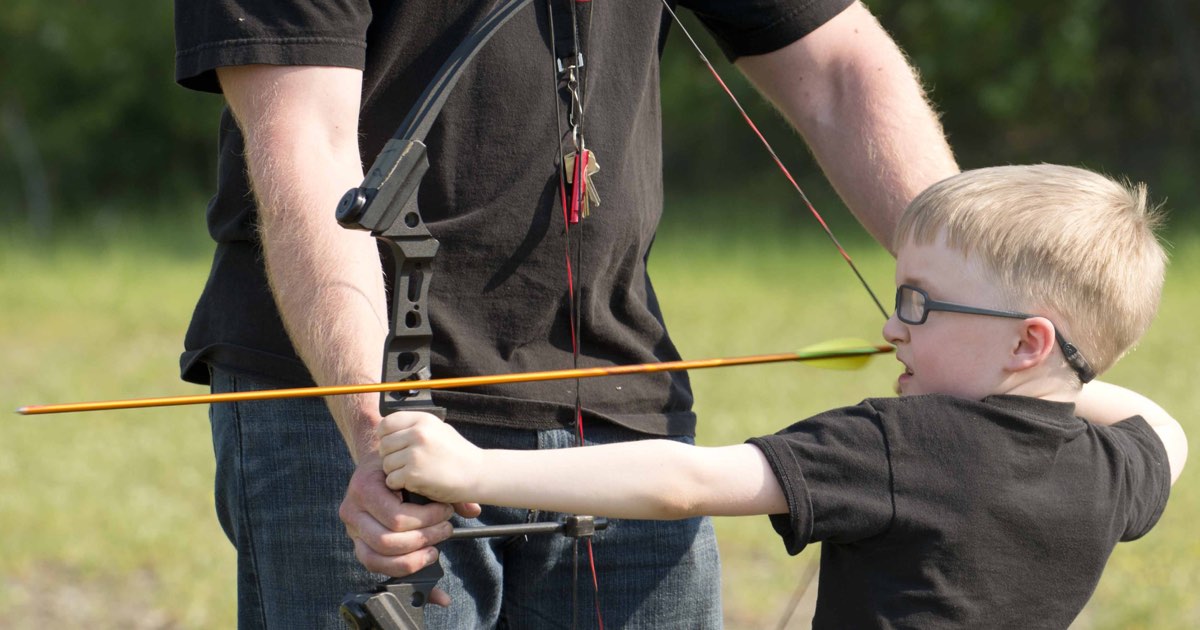
Archery is one of the few sports a child can start young and keep for life. It rewards patience and focus more than size or strength, and children often learn good form faster than adults because they have fewer habits to unlearn.
The equipment, though, has to fit. A bow that is too heavy or too long for a child is the fastest way to turn an exciting first session into a frustrating one, and an arrow that is too short is a genuine safety risk. This guide explains how to size a child's bow, what kind of bow to choose, and what else they need.
When can a child start archery?
There is no single right age, but most clubs and organised programmes start children at around 8 years old. By then most children can follow multi-step instructions, understand range rules, and have the strength to draw a light bow properly.
The largest youth programme in the world, the National Archery in the Schools Program (NASP) in the United States, teaches target archery to students in grades 4 to 12 as part of physical education. NASP reports more than 1.3 million students taking part each year.
Younger children can enjoy archery too, but they need very light equipment, close-range targets, and an adult right beside them. Signs a child is ready:
- They can listen to and follow safety instructions every time.
- They can stand still on a line and wait their turn.
- They can draw a very light bow to their face without straining.
- They are genuinely interested, rather than being pushed.
Step 1: Measure draw length
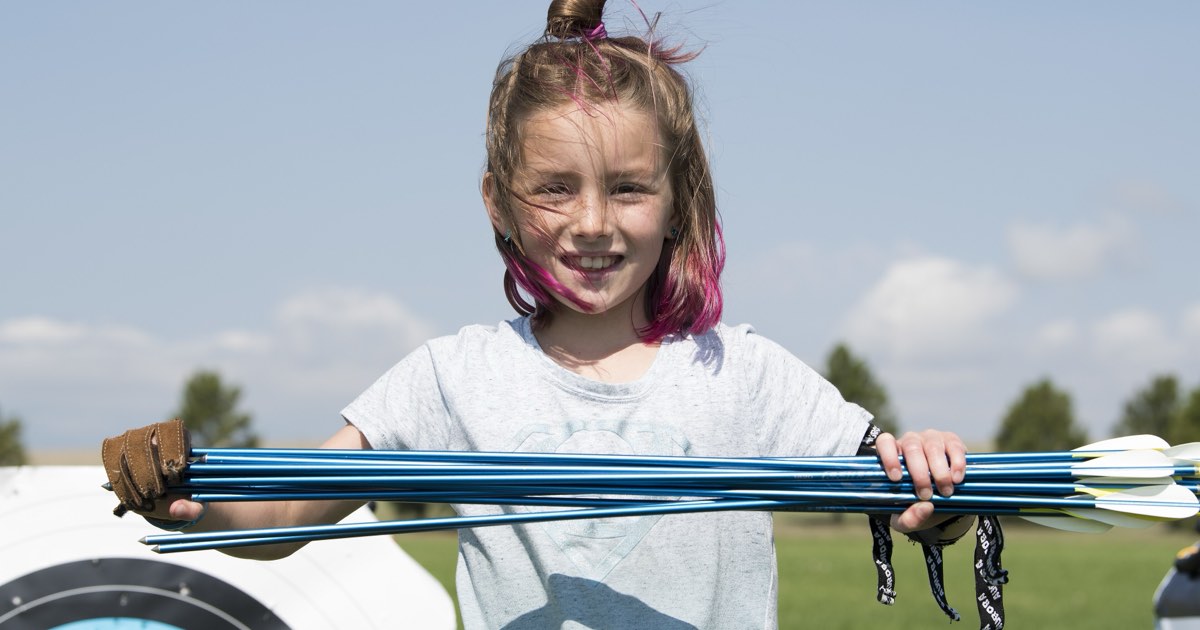
Draw length decides the bow length, the arrow length, and for compound bows the bow's setting. Measure it before you shop.
- Have the child stand against a wall with arms stretched out to the sides, palms forward.
- Measure from fingertip to fingertip. This is the wingspan.
- Divide the wingspan in inches by 2.5 for an estimated draw length.
A child with a 50-inch wingspan has an estimated draw length of about 20 inches. Children grow quickly, so re-measure every few months. Our draw length guide explains the method in detail.
Step 2: Choose the type of bow
There are three sensible choices for children, plus one to avoid.
| Bow type | What it is | Best for |
|---|---|---|
| Youth recurve | A small recurve, often a takedown, in light draw weights | Club programmes, Olympic-style target archery, learning form |
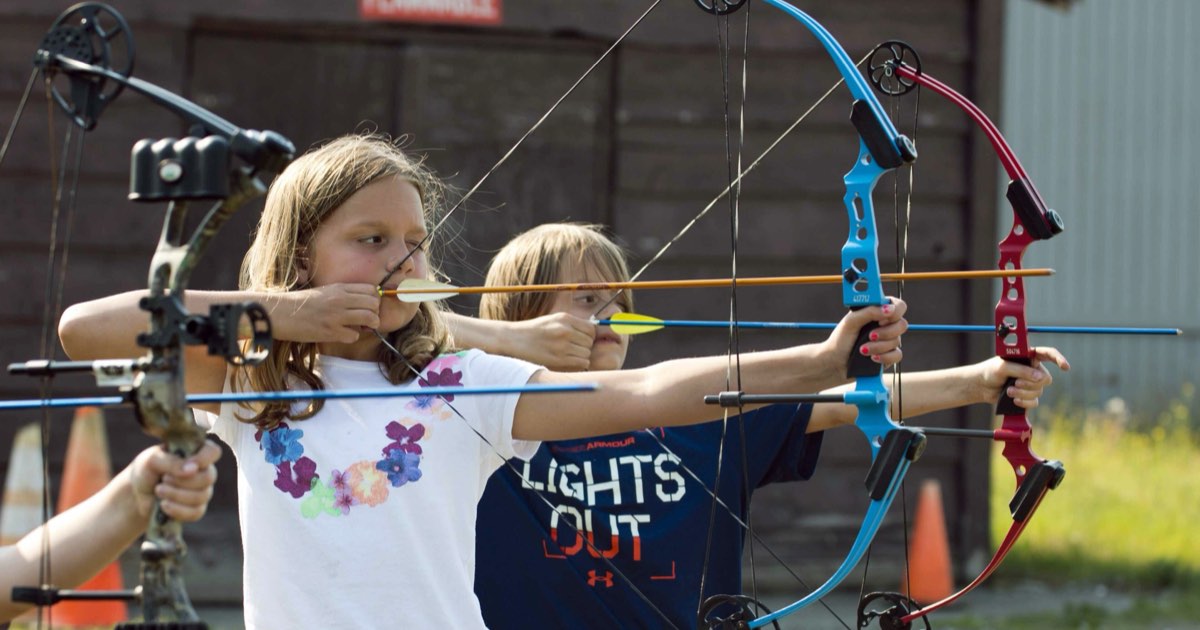
| Zero let-off youth compound | A compound with cams but no let-off, fitting a wide range of draw lengths | School programmes, groups and siblings sharing one bow |
| Adjustable youth compound | A compound with let-off and wide draw-length and draw-weight adjustment | Children interested in compound or future bowhunting |
| Toy bow | Plastic bows with suction-cup arrows | Play only; not suitable for learning archery |
Zero let-off: the Genesis bow
The bow used throughout NASP is the Genesis, and its design is a good illustration of what works for children. According to NASP and its owner's manual:
| Specification | Genesis Original |
|---|---|
| Draw weight | Adjustable, 10 to 20 lb |
| Draw length | Fits any draw from 15 to 30 inches without adjustment |
| Let-off | Zero |
| Axle-to-axle | 35.5 in |
| Brace height | 7.625 in |
Because it has no let-off and no fixed draw length, a 9-year-old and a 16-year-old can shoot the same bow safely, and it behaves much like a recurve in the hand. That is why schools and clubs with shared equipment favour it.
Adjustable compounds
Bows such as the Bear Cruzer G3 adjust from very short draw lengths (14 inches on the Cruzer G3) to adult lengths, with draw weights from very light up to hunting weight. They suit a child who wants a compound of their own and will grow into it, but they must be set to the child's draw length and a light draw weight by a knowledgeable adult or shop.
Youth recurves
A small takedown recurve teaches the fundamentals of form that transfer to every other bow, and limbs can be swapped for heavier ones as the child grows. This is the usual path into club target archery and junior programmes.
Step 3: Pick a draw weight
There is no official draw weight chart for children, and published charts disagree. The figures below are typical starting ranges drawn from several retailer and coaching charts. Treat them as a starting point only, and go lighter if in doubt.
| Approximate age | Typical starting draw weight |
|---|---|
| 6 to 8 | about 6 to 12 lb |
| 8 to 10 | about 10 to 15 lb |
| 10 to 12 | about 12 to 20 lb |
| 12 to 14 | about 15 to 24 lb |
| Teens | about 18 to 26 lb, depending on size and experience |
The test that matters more than any chart:
- The child draws the bow smoothly to their face without lifting it above the target.
- They hold at anchor for about five seconds without shaking.
- They let down slowly and under control.
If they cannot do all three, the bow is too heavy. A bow that is too heavy teaches children to strain with their arms, to "sky-draw" by pointing the bow upward, and to snatch the release, and those habits are hard to undo.
Remember that recurve limb weights are marked at a 28-inch draw. A child drawing 20 inches will pull considerably less than the marked weight, which is useful: a 20 lb limb might feel like 12 to 14 lb to a small child. Ask the shop to measure the actual weight at the child's draw length.
Step 4: Pick a bow length (recurves)
A recurve that is too long for the child is unwieldy; one that is too short for their draw will stack and feel harsh. Typical guidance:
| Child's draw length | Typical recurve length |
|---|---|
| Under about 22 in | 48 to 54 in youth bows |
| About 22 to 26 in | 54 to 62 in |
| About 26 to 28 in | 62 to 66 in |
Compound bows are sized by draw-length setting rather than overall length.
Step 5: Match the arrows
Arrows are where children's equipment most often goes wrong.
- Length: arrows must be long enough that the point stays in front of the rest at full draw, with at least an inch or two of margin. Many children's sets come with arrows cut for an adult or a much smaller child; check them.
- Spine: light bows need flexible arrows. Aluminium arrows in small sizes, such as the 1214 and 1416 sizes in the Easton XX75 Jazz range, are made for exactly this.
- Points: use target or field points, never broadheads.
- Nocks: should clip onto the string and stay there.
Our guide to choosing arrows explains spine and length in detail.
Step 6: Protective gear
| Item | Why children need it |
|---|---|
| Arm guard | Children often let the bow arm elbow rotate into the string's path. A guard prevents painful bruises that put them off. |
| Finger tab or glove | Protects young fingers on recurve and zero let-off bows. |
| Chest guard | Keeps loose clothing out of the string; useful for most children. |
| Closed shoes | Arrows that miss end up in the grass. |
| Release aid (compound only) | Only for adjustable compounds with let-off, and only once the child is ready; most programmes start children on fingers. |
Step 7: Choose the right eye
Children often have a dominant eye on the opposite side to their dominant hand. Check before buying a right- or left-handed bow:
- Ask the child to make a small triangle with their hands at arm's length.
- With both eyes open, they look through it at a distant object.
- Cover each of their eyes in turn. The eye that still sees the object is dominant.
Most coaches recommend shooting on the side of the dominant eye. If the child is unsure or the result changes, a coach can help.
Safety rules for young archers
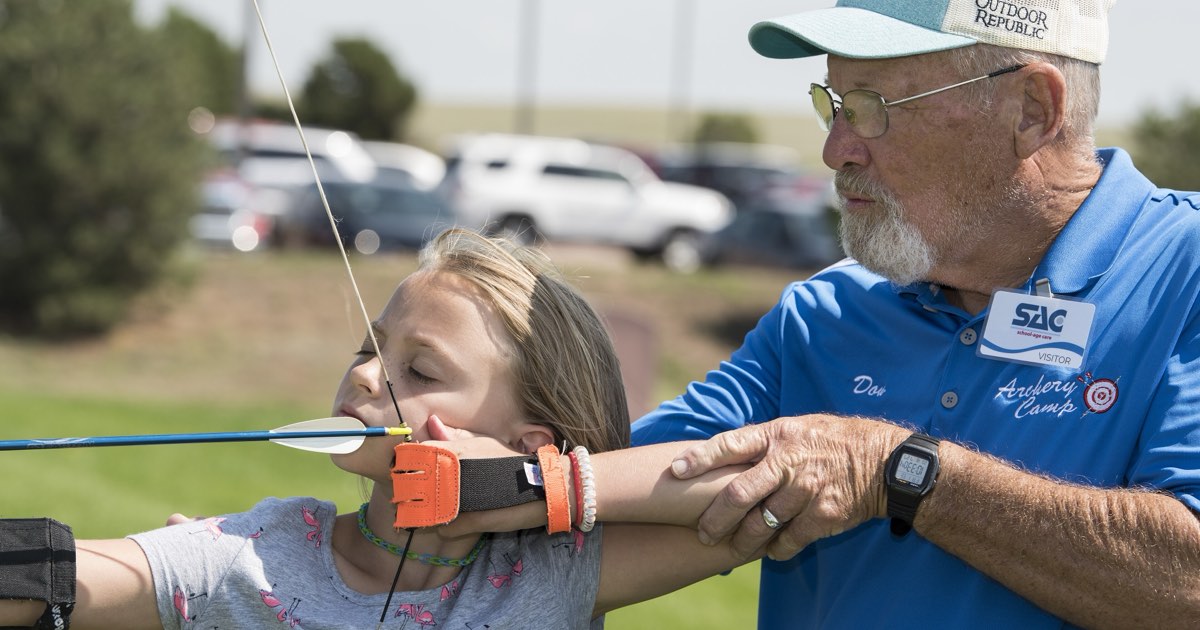
- Always supervised. An adult should be on the line with children every time.
- Learn the range rules first. Two whistles to the line, one to shoot, three to collect; our range safety guide explains them.
- Never point a bow at anyone, even without an arrow.
- Never dry-fire. Releasing the string without an arrow can break the bow.
- Close range first. Start at 5 to 10 metres on a large target, and move back only when arrows land consistently.
- Short sessions. Twenty to forty arrows with breaks is plenty for most children.
Where children can learn
- Club junior sessions: most archery clubs run junior or family sessions with coaches and loan equipment. In the United States, USA Archery's JOAD (Junior Olympic Archery Development) clubs are the usual starting point.
- School programmes: NASP in the United States, and similar schemes in other countries, introduce archery during school hours.
- Scouting and outdoor centres: many run supervised taster sessions.
Children who stay with the sport can compete in age categories all the way to the World Archery Youth Championships, which are contested in under-18 and under-21 categories.
If you are ready to look at equipment, you can browse youth recurve bows on Amazon. Check the draw weight, bow length and arrow length in every listing against the steps above.
Frequently asked questions
What size bow does a 10-year-old need?
It depends on the child's draw length rather than their age. Many 10-year-olds have draw lengths around 20 to 24 inches and suit a youth recurve of about 54 inches or an adjustable or zero let-off compound, at a draw weight they can hold for five seconds.
Should a child start on recurve or compound?
Either works. Recurve and zero let-off bows teach the fundamentals of form and are what most clubs and schools use. Adjustable compounds suit children with a specific interest in compound or bowhunting.
Is archery safe for children?
With supervision, correct equipment and range rules, yes. Archery's safety rules are simple enough for children to learn quickly, and most junior sessions are run by trained coaches.
How often should we replace the bow?
A takedown recurve or adjustable compound can last several years by changing limbs or settings. Re-measure draw length every few months, and replace arrows when the child's draw grows past their safety margin.
Related articles
 Reviews
Bear Cruzer G3 Review: The Grow-With-You Compound Bow Explained
Research-based Bear Cruzer G3 review: 14–30 in draw, up to 70 lb, 75% let-off. Published specs, who it suits, and how it compares with the Diamond Infinite 305.
Updated July 10, 2025 · 4 min read
 Guides
How to Choose Your First Recurve Bow: A Beginner's Guide
How to choose a first recurve bow: takedown vs one-piece, draw weight, bow length for your draw length, riser types, eye dominance, and essential accessories.
Updated February 6, 2025 · 11 min read
 Guides
Archery Range Safety Rules and Whistle Commands Explained
Archery range safety explained: whistle commands, shooting and waiting lines, collecting arrows safely, equipment checks, and what the Fast call means.
Updated April 10, 2026 · 10 min read