
Arrow Spine for 30–45 lb Recurve Bows
Arrow spine for 40 lb, 35 lb and 45 lb recurves: starting ranges read from Easton's target chart, the inputs that shift them, and the bare-shaft check.

By Archery Insider Editorial Team
· 5 min read
In this article
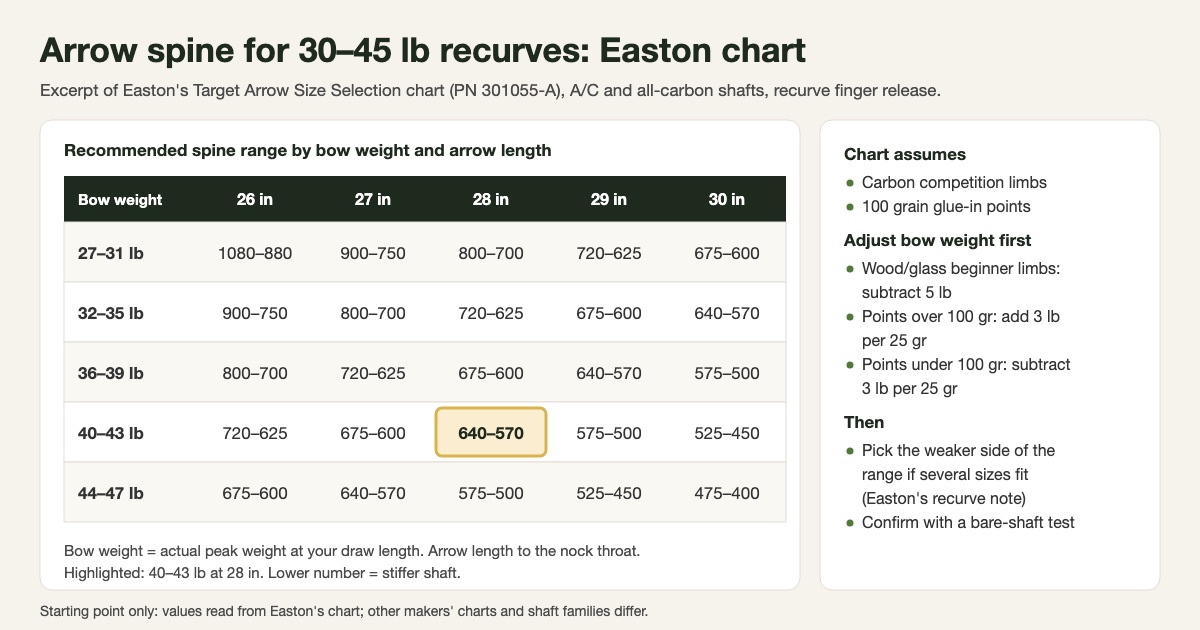
For a 40 lb recurve with 28 in carbon arrows, Easton's target chart gives a starting spine range of 640–570. A 35 lb bow at the same length reads 720–625, and 45 lb reads 575–500. Those figures assume the weight you actually hold on your fingers, carbon limbs and 100 grain points, so adjust for your setup and confirm the choice with a bare-shaft test.
Quick answer: Easton's chart for 30–45 lb recurves
The table below is read directly from Easton's Target Arrow Size Selection chart (PN 301055-A), the A/C and all-carbon section, using the recurve, finger release, carbon limb bow-weight column. Arrow length is measured to the throat of the nock.
| Bow weight on the fingers | 27 in | 28 in | 29 in | 30 in |
|---|---|---|---|---|
| 27–31 lb | 900–750 | 800–700 | 720–625 | 675–600 |
| 32–35 lb | 800–700 | 720–625 | 675–600 | 640–570 |
| 36–39 lb | 720–625 | 675–600 | 640–570 | 575–500 |
| 40–43 lb | 675–600 | 640–570 | 575–500 | 525–450 |
| 44–47 lb | 640–570 | 575–500 | 525–450 | 475–400 |
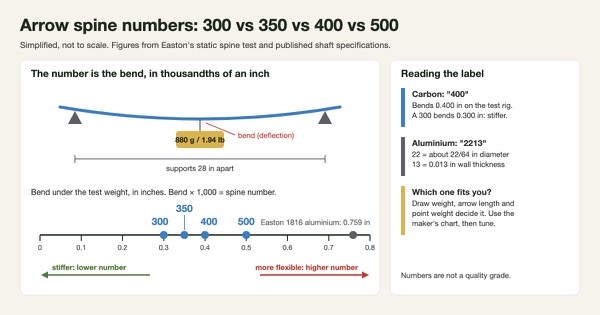
Each cell is a range of spine numbers, and a lower number is a stiffer shaft; our guide to arrow spine numbers explains the scale. Where more than one shaft fits, Easton's note is clear: "When selecting an arrow for a recurve bow, it is recommended to choose an arrow on the weaker side of the recommended spine range."
Aluminium shafts use a separate, size-code section of the same chart, and other makers' charts differ, so use the chart for the shaft you're buying.
Why draw weight on your fingers matters
The weight printed on recurve limbs is usually rated at a 28 in draw, so it only matches what you hold if your draw is about that length. Easton's chart instructions say that "Actual Peak Bow Weight for recurve bows and longbows should be measured at your draw length," and that "your local archery pro shop is the best place to determine the actual draw weight of your bow."
Our first recurve guide explains how draw length changes the marked weight.
The chart then adjusts that figure. Easton's chart assumes carbon competition limbs. For "Wood/Glass Beginner Limb," it says to subtract 5 lb of bow weight. Check which limbs you have first.
Arrow length and point weight shift spine
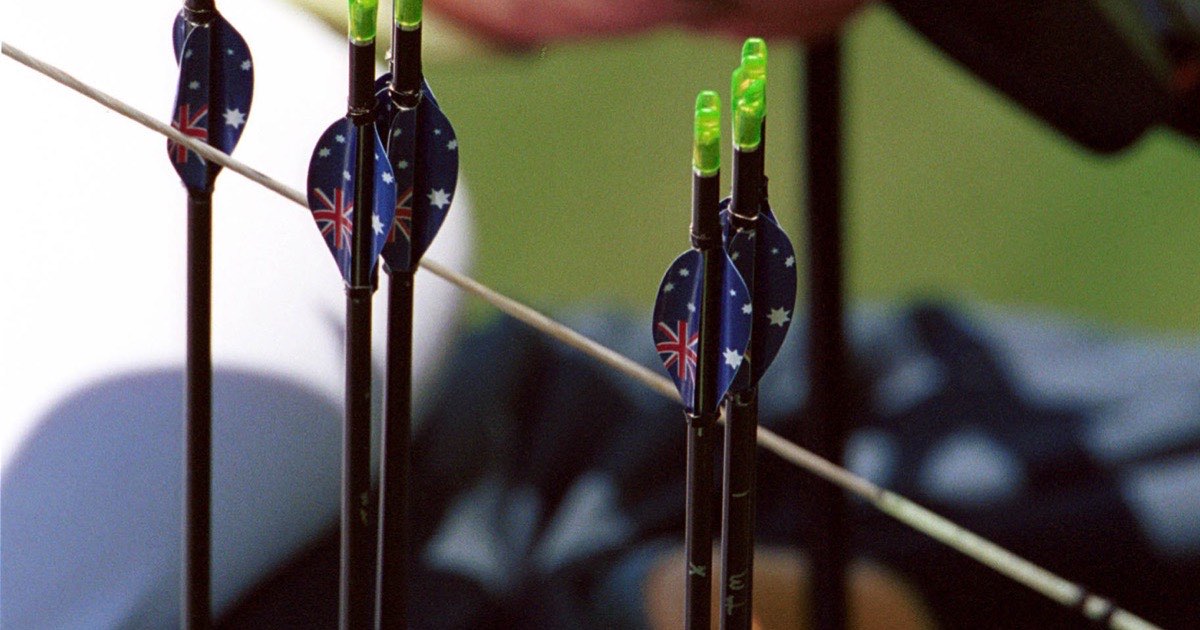
Across any row, the numbers fall as arrows get longer: a longer shaft acts weaker, so it needs a stiffer spine.
Point weight works the same way. Easton's chart assumes "glue-in 100 grain points." For heavier points it adds 3 lb of bow weight for every 25 grains over 100; for lighter points it subtracts 3 lb per 25 grains.
A worked example: a recurve that holds 35 lb at your draw, with wood and glass limbs, counts as 30 lb. With 28 in arrows and 100 grain points, that's the 27–31 lb row: 800–700. Switch to 125 grain points and you're back to 33 lb, the 32–35 lb row: 720–625.
Length is set first, because it depends on your draw and safety margin. Our arrow selection guide covers how to measure it.
Test with a bare shaft
Easton's tuning guide says the bare-shaft test "is also useful for determining if the correct shaft has been selected." Shoot at least three fletched arrows at 15 to 20 yards, then two identically aimed unfletched shafts.
For a right-handed archer, bare shafts that land left are stiff. Easton suggests a weaker plunger spring, slightly more bow weight or a heavier point. Bare shafts to the right are weak, and the fixes reverse. Left-handed archers read it the other way round.
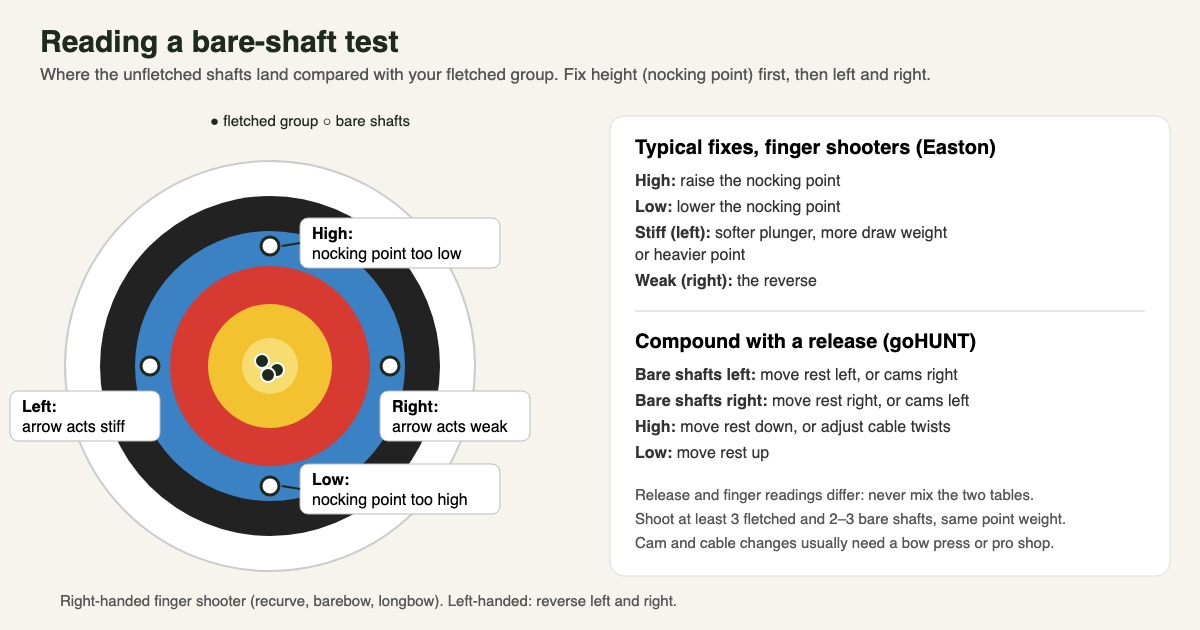
If the bare shafts still land more than 6 inches left or right of the fletched group at 20 yards, Easton says you need to change the equipment, which can mean a weaker or stiffer spine.
Once the chart and your measurements agree, you can browse 500 spine carbon recurve arrows or recurve arrows in 600 spine on Amazon. If you prefer aluminium, our Easton XX75 Jazz review covers one example to consider.
Frequently asked questions
What spine arrow for a 40 lb recurve?
On Easton's target chart, A/C and all-carbon section, a recurve holding 40–43 lb with carbon limbs reads 640–570 at 28 in and 575–500 at 29 in. Subtract 5 lb first for wood and glass limbs, adjust for point weight, choose the weaker side, then bare-shaft test.
What spine arrow for a 35 lb recurve?
Easton's chart puts 32–35 lb at 720–625 for a 28 in carbon arrow and 675–600 at 29 in. With wood and glass beginner limbs, Easton subtracts 5 lb, which moves a 35 lb bow into the 27–31 lb row: 800–700 at 28 in.
What spine arrow for a 45 lb recurve?
A recurve holding 44–47 lb reads 575–500 at 28 in and 525–450 at 29 in on Easton's carbon target chart, assuming carbon limbs and 100 grain points. Treat that as a starting range and confirm it with bare shafts before buying a full dozen.
Related articles
 Guides
How to Choose Arrows: Spine, Length, Weight and Spine Charts
How to choose arrows: what spine means, reading a spine chart, measuring arrow length, arrow weight and FOC, fletching, and bare-shaft tuning to confirm it.
Updated June 26, 2026 · 9 min read
 Guides
How to Choose Your First Recurve Bow: A Beginner's Guide
How to choose a first recurve bow: takedown vs one-piece, draw weight, bow length for your draw length, riser types, eye dominance, and essential accessories.
Updated February 6, 2025 · 11 min read
 Guides
Arrow Spine Numbers: 300 vs 350 vs 400 vs 500
Arrow spine 400 vs 500, 300 vs 350: what the numbers on a shaft mean, why lower is stiffer, and how aluminium size codes like 2213 differ.
Updated October 6, 2026 · 5 min read